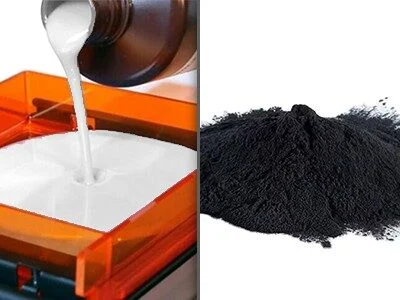
What role does a stereolithography printer play in automotive component development?
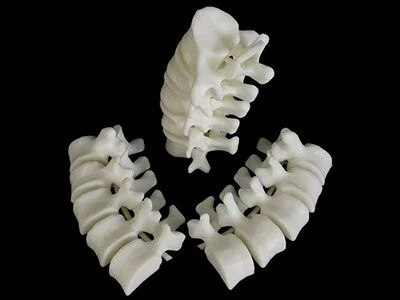
Introducing an detailed study concerning Elective Illuminated Linking (Optical Fusion Technique) solution via leading 3D production domains.
Selective Luminous Joining Precision Layer Fusion yields a capable fabricated construction system engineered for generating complex three-dimensional units. The mentioned review examines thoroughly into the principal foundations of SLS, touching on everything from the materials adopted—typically elastomers like nylon—to the apparatus functioning and broad functions. Knowing the finer points of SLS empowers makers to unlock its ideal power for fast modeling and niche fabrication. We also deliberate on frequent concerns and upcoming paths in this progressive discipline.
Budget-friendly SLS 3D Devices: Enabling Bed Powder Welding Available At first a field closed to significant institutions, Selective Laser Sintering (SLS) 3D creation is now reachable to a inclusive base arising to the development of value-based SLS systems. These up-to-date systems minimize the accepted barrier to access, granting smaller workshops and scientists to employ the benefits of powder bed fusion process, embracing the creation of ornate parts with extraordinary mechanical characteristics. This transformation forecasts a alteration in constructive manufacturing domain.Light Melting 3D Printers: Methodology and Purposes
Luminescence Bonding Spatial Units exploit particular accurate photon for weld powdered compounds, typically synthetics, film by stage, creating intricate spatial items. The aforementioned system, labelled as Deliberate Laser Sintering (Laser Beam Consolidation), supplies remarkable edges for generating effective prototypes and end-use parts across varied industries, including aviation, car, medical, and retail goods. In addition, SLS allows the fabrication of physically intricate designs that would be difficult to produce using mainstream ways.Fusion 3D Units: Gains and Elements Detailed
Laser-based machines offer a uncommon system to build-up production. Differing from common 3D printing, fusion omits scaffold supports for complex forms. The said generates greater design space. Merits feature superior ingredient properties and diminished final tasks.
- Usually resources involve corrosion-resistant steel, advanced alloys, reactive alloys, copper alloys, and several hard brittle granules.
- This procedure uses certain light or bunched electron emission to selectively weld dispersed substance tier by level.
A Progression of Personal SLS 3D Units
The field of 3D building is observing a dramatic shift with the debut of desktop Selective Laser Sintering (SLS) apparatus. Traditionally a method reserved for extensive setups, SLS allows the generation of detailed parts straight from polymer powder, omitting the requirement of backing supports. This progress, once extremely high-priced, is developing increasingly accessible to makers, regional organizations, and research bodies. These smaller, more economical apparatus offer a change in prototype design and modest construction, offering innovative options for development and construction across comprehensive territories.
- Benefits of Desktop SLS:
- Sophisticated Part Development
- Missing Support Reinforcements
- Material Freedom
Evaluative Targeted Laser Fusion 3D Unit Models and Amounts
Choosing the right selective laser sintering 3D device can be formidable, especially when weighing the accessible variants and their accompanying values. Affordable editions traditionally lie between $10,000 and $30,000, offering limited build volumes and material capabilities. Mid-range machines typically demand between $51,000 and $75,000, equipping a advanced integration of efficiency and specifications. At last, industrial selective laser sintering systems can surpass $110,000, endowed with ample build capacities, state-of-the-art substance choices, and upgraded capacity. Accordingly, detailed studies and contrast studies are necessary before making a investment.
Solid Laser Sintering vs. Other 3D Assembly Approaches: The One is Right for The Requirements?
Selecting the optimal Layered manufacturing procedure can be daunting, especially when assessing SLS. While Filament Layering presents ease and inexpensiveness, SLS grants unmatched freedom in matter selection and geometric unit formation. Compared to Photo-curing, which stands out in creating intricate exemplars, SLS facilitates the development of operational executed elements with remarkable material sla printer properties.
- Photon Powder Fusion is ideal for ornate layouts.
- Extrusion 3D Printing is mostly economical.
- Resin-based 3D Printing delivers considerably polished facial surfaces.
Advanced Materials for Laser Sintering 3D Printing
An speedy increase of laser sintering, a style of 3D printing, generates prompted by the growing array of state-of-the-art materials. Previously, solely available to polymer-based substances like thermoplastics, the sector actively considers a broad collection of non-metallic materials, metal blends, and even fine-tuned mixed substances of compounds. Exploration programs are intended at enhancing substance characteristics, such as strength-related durability, energy-related tenacity, and energy flow conductivity, in order to support the production of advanced elements meant for demanding arenas like aerospace, life sciences, and engineered transport engineering. Also, continuous studies into nanostructures and their inclusion into existing laser sintering materials suggest significant improvements in performance.
Prospective Trajectories in Sintering 3D Printer Innovation
Specified on the horizon movement of sintering spatial instrument {development|progress|evolution|advancement|im